

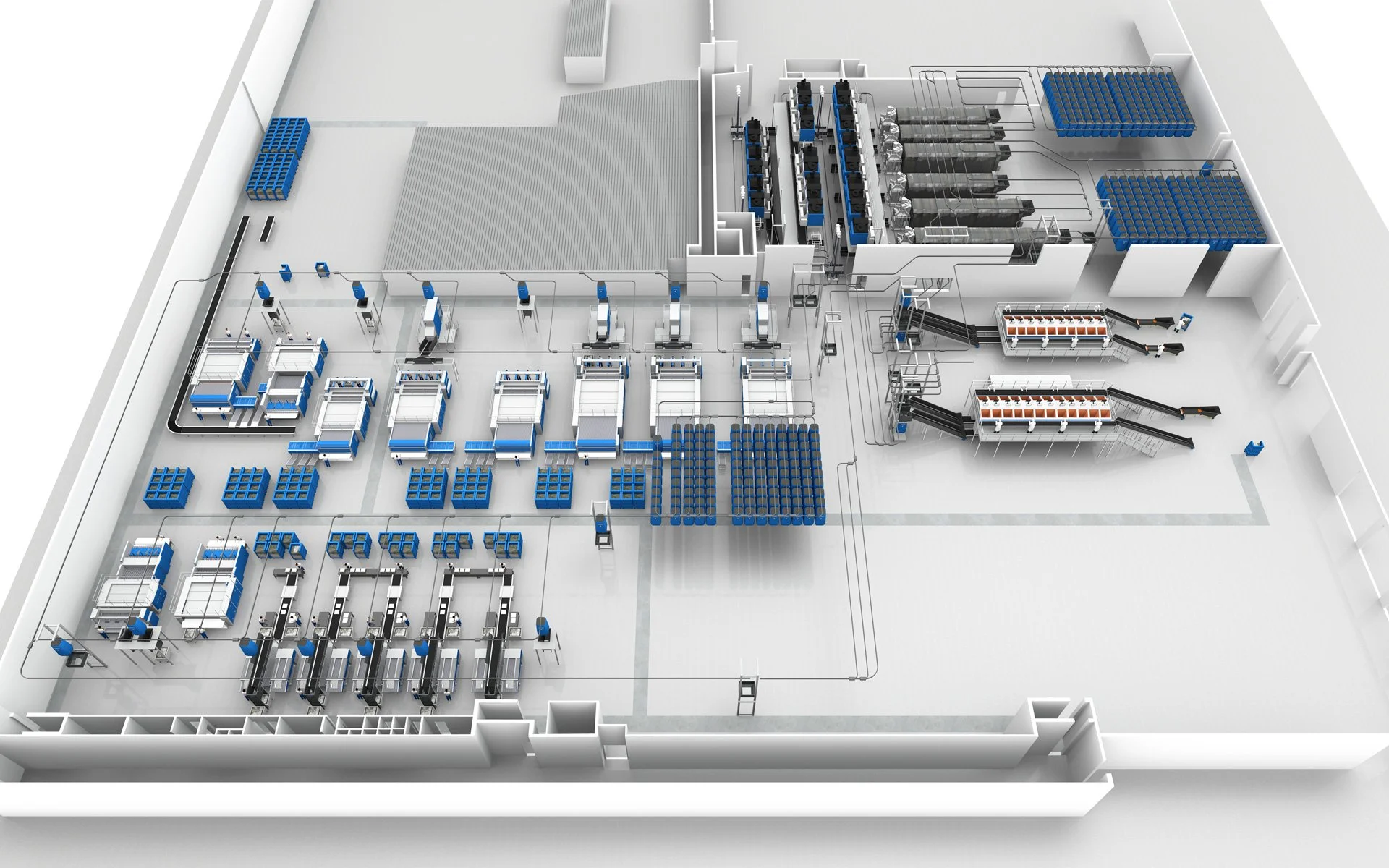
Build Me a Mega Plant with a Capacity of 1,000 Tonnes per Week
From Start to Finish It Took Three Years — And We Made Plenty of Mistakes
In 2013, the owner of South Pacific Laundry set out an ambitious vision: to create a MEGA plant capable of processing 1,000 tonnes of linen per week. A site was identified for the project (a decision which, in hindsight, presented significant challenges), and planning for the plant’s design began. The goal was to consolidate SPL’s two Melbourne-based facilities into a single site, achieving scale and operational efficiency while growing overall production capacity to 1,000 tonnes per week.
As the leader of the team, my role encompassed overseeing the relocation of equipment (new and existing) , integrating staff from multiple sites, and managing production through the transition.
The installation of new equipment was completed in late 2015, paving the way for the first stage of the merger: the relocation of the Epping plant (110 tonnes per week). This move acted as a stress test for the new facility and quickly revealed a range of operational and technical issues that required resolution.
In early 2016, we undertook the far larger task of relocating the Brunswick plant (450 tonnes per week). This process involved a staged transfer of existing equipment alongside new installations and was completed within a compressed four-week timeframe. Significant challenges emerged during this phase, including throughput bottlenecks where the three shuttles feeding 28 double-batch dryers struggled to keep pace with the five CBWs (Continuous Batch Washers). As a result, the planned throughput of 10 tonnes per hour was constrained to approximately 60% for a period of three months while solutions were implemented.
It took an additional twelve months for the plant to stabilize and reach optimal performance levels. Once settled, the focus shifted to building volume and scaling the business towards the 1,000-tonne weekly production target.
The lessons learned from managing such a complex merger of new and legacy equipment and navigating the operational integration of multiple sites were invaluable. These insights now form a critical part of my expertise and can provide significant benefits to other businesses undertaking large-scale transitions.